
Piscators Guide · Marine Electronics
How to Choose a Fish Finder & Sonar System
Start with the water you fish and the information you actually need. The right transducer and a readable screen matter more than buying every available feature.
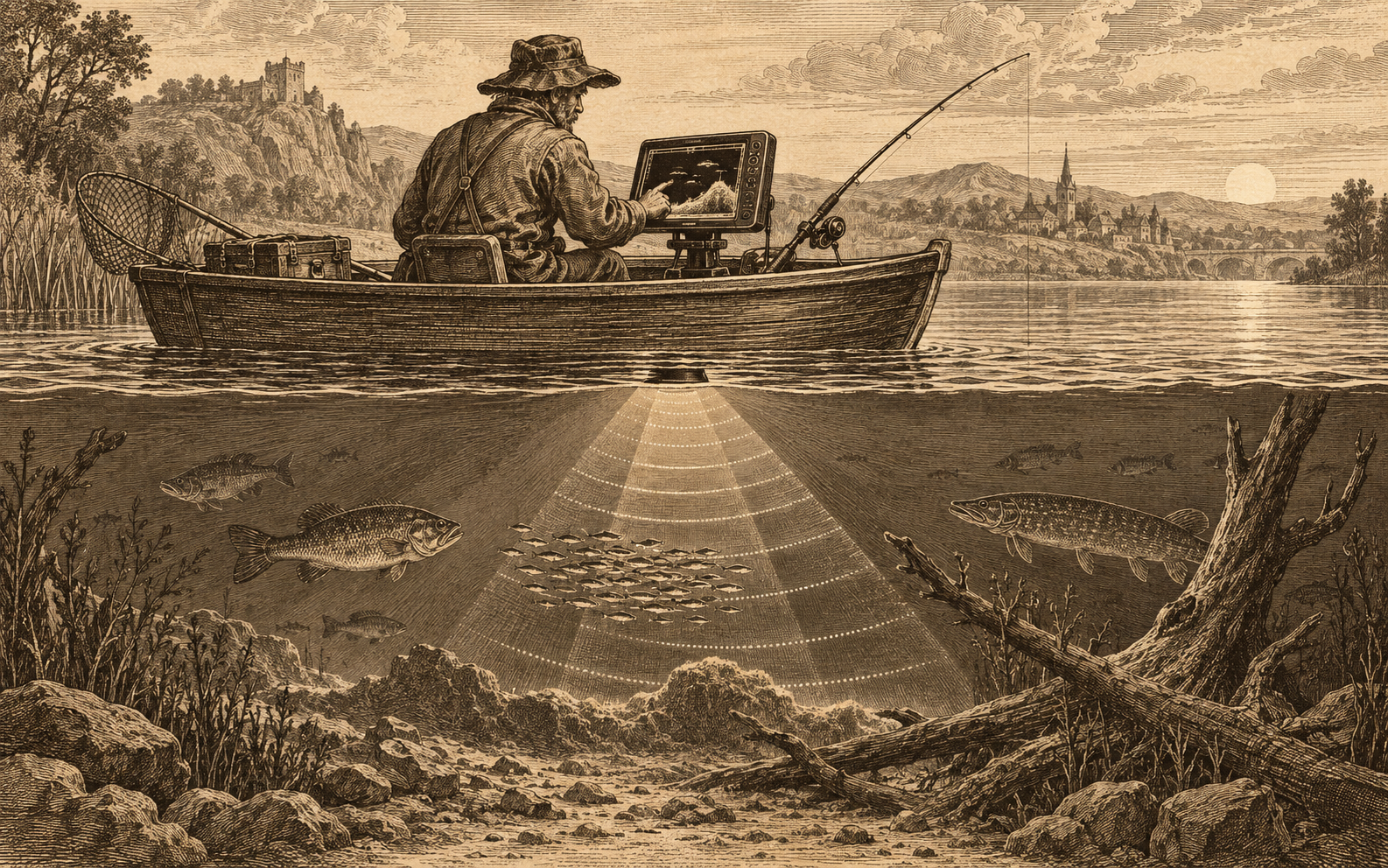
The short answer
For most anglers, a color unit with GPS, mapping, CHIRP sonar, and a properly matched transducer is the useful starting point. Add down imaging, side imaging, or forward-facing sonar only when those views solve a real fishing problem.
Begin with the decision
Four questions narrow the field
Answer these before comparing brands or model numbers. They determine the display, transducer, mapping, and installation you are likely to need.
Where will it live?
Kayak, small skiff, bass boat, bay boat, offshore boat, portable kit, or ice setup. Space, power, mounting, and exposure change the choice.
What water do you fish?
Shallow flats, freshwater lakes, rivers, deep reservoirs, coastal bays, or offshore water require different frequencies, mapping, and power.
What must you see?
Depth and bottom, fish beneath the boat, structure to either side, your lure in real time, or safe navigation and saved waypoints.
Will the system grow?
A standalone display is simpler. Networking, trolling-motor integration, extra transducers, radar, and multiple stations favor an expandable platform.
Understand the views
What each sonar type actually adds
More views are not automatically better. Each technology answers a different question.
2D / CHIRP sonar
Best for: depth, bottom hardness, bait, and fish beneath the boat. This remains the foundation of a useful fish finder.
Down imaging
Best for: a more picture-like view of structure directly below. It helps separate brush, timber, rock, and fish close to cover.
Side imaging
Best for: searching broad, relatively shallow water without driving directly over every target. Installation and interpretation matter.
Forward-facing sonar
Best for: watching fish, cover, and presentations in real time ahead of the boat. It adds cost, installation demands, and a learning curve.
Choose the system level
Three sensible starting configurations
These are capability tiers—not product rankings. Screen size, included charts, transducer model, and installation costs can move similar-looking units into very different price classes.
Simple and useful
Depth, fish, and waypoints
A compact color display with GPS and CHIRP sonar suits kayaks, jon boats, small skiffs, and anglers who mainly need dependable information beneath the boat.
- CHIRP 2D sonar
- GPS and waypoint marking
- Compact screen and modest power needs
Versatile all-around system
Mapping plus multiple views
A larger combo unit with CHIRP, down imaging, side imaging, and useful charting fits many lake, river, bay, and inshore anglers.
- 7- to 9-inch display is a practical range
- Down and side imaging
- Charts, waypoints, and split-screen use
Specialized and expandable
Networked or live-sonar platform
Serious structure fishing, competitive use, multiple displays, or offshore integration may justify a networkable system and specialized transducers.
- Forward-facing sonar capability
- Networking and trolling-motor integration
- Greater installation, power, and learning demands
Before you buy
The details that matter more than the logo
A good display paired with the wrong transducer or installation can perform worse than a simpler, properly matched system.
Confirm the exact transducer
Do not assume every package includes the same transducer. Verify its frequencies, imaging modes, mounting style, cable length, temperature sensor, and compatibility with the display.
Buy enough screen for split views
A small screen may be readable with one view but cramped when mapping and sonar share the display. Viewable area matters more than the diagonal number alone.
Check chart coverage and ongoing cost
Included basemaps vary. Confirm coverage for your actual water, contour detail, update policy, subscription requirements, and whether custom mapping is supported.
Plan power and mounting
Allow for battery capacity, clean wiring, fusing, connectors, transducer placement, interference, screen visibility, security, and removal when the boat is unattended.
Match the ecosystem only when useful
Brand integration can simplify trolling-motor control, shared waypoints, and networking. It can also create lock-in. Pay for an ecosystem only when you will use it.
Price the complete installation
The display may be only part of the cost. Include mounts, transducers, adapters, map cards, batteries, wiring, network hardware, and professional installation if needed.
Do not pay twice for the same capability.
A common mistake is buying an inexpensive display, then replacing it when mapping, side imaging, networking, or a larger screen becomes necessary. Decide which capabilities are likely within the next few seasons and buy a platform that can accommodate them—without paying now for features you may never use.
Piscators research path
From a useful guide to a defensible Pick
Piscators will compare current systems only after narrowing the use case, display class, included transducer, chart package, and installation requirements. Ratings from unlike bundles or mixed model families will not be treated as though they describe one identical product.
The eventual Piscators Pick will show its evidence, limitations, and the specific angler or boat configuration it fits. Until that work is complete, this page offers decision guidance—not a claim that one brand is universally best.
Disclosure: Retailer links may later become affiliate links, which can earn Piscators a commission without changing the price paid by the reader. Product recommendations are research-based unless firsthand Piscators testing is specifically stated. Marine electronics support fishing and navigation but do not replace official charts, prudent seamanship, required safety equipment, or awareness of current conditions.